
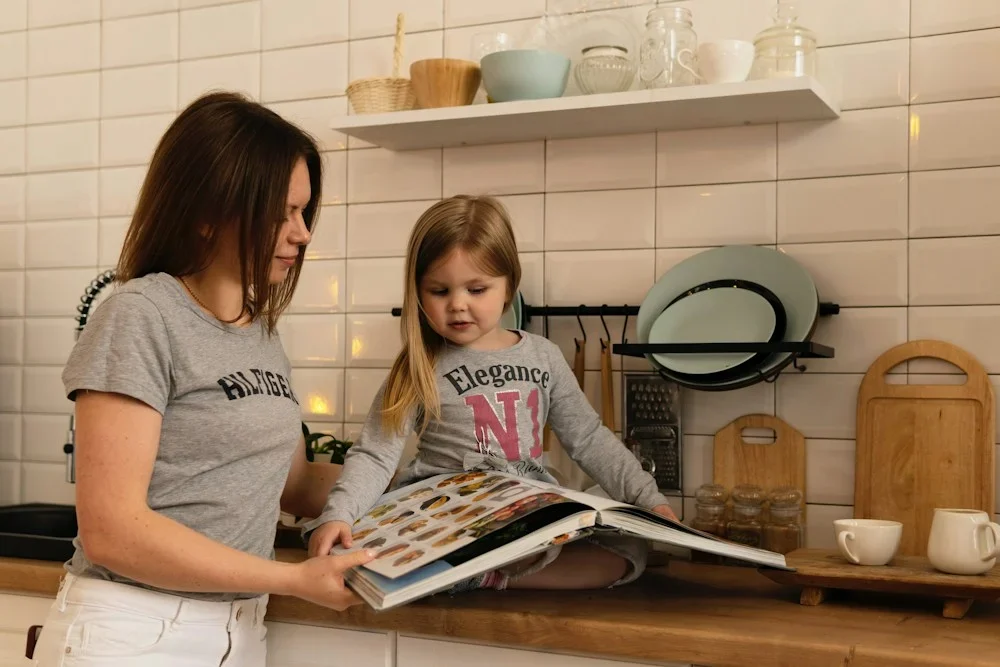
Many of us are somewhere in between, balancing paid work, caregiving, and the parts of ourselves we’re still discovering. When we introduce ourselves, how can we make room for more of who we are?
I was sitting in our dimly lit kitchen next to my husband and across the table from my sister, her husband, with their new baby asleep in her arms. They had been staying with us for the past week, navigating the early days of parenthood for the first time. Her husband had recently gone back to work, while my sister was home with their baby.
As I got ready for bed, I reflected on the conversation we’d had earlier that evening, realizing that both my sister and I had referred to ourselves as stay-at-home moms while our husbands, sitting beside us with their more stable nine-to-five jobs, hadn’t seemed to second-guess the words we were using.
Earlier that week, my husband, kids, and I had attended a gathering in a neighbor’s backyard. As we met new families and watched our children run excitedly toward a towering treehouse, I noticed how quickly the question “So, are you a stay-at-home mom, or do you work?” surfaced, usually just after we’d exchanged names.
Since leaving my corporate job last spring, I’ve struggled with how to answer that question. It felt easier to just say, “I’m a stay-at-home mom now,” because who needs the long-winded answer, anyhow? But when we define ourselves strictly by our employment status, we risk trapping ourselves in traditional definitions that are increasingly out of step with the realities of modern motherhood.
Parents are not defined by whether or not they work
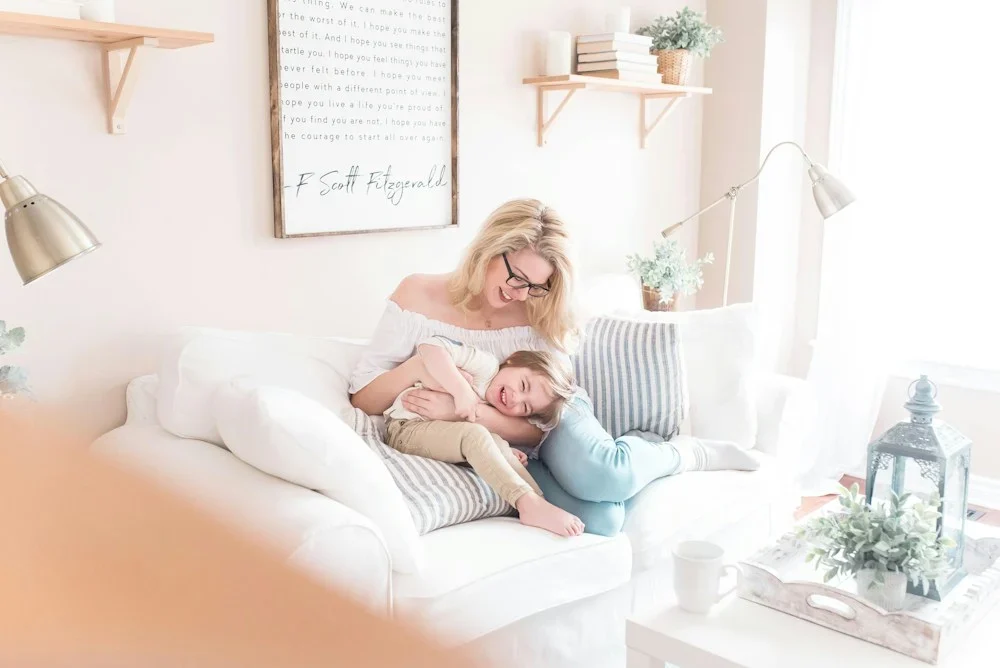
The thing is, my sister and I both work. Before her daughter was born, my sister was a nanny and wedding photographer. I’ve recently been navigating the newness of being home with our kids, whom we pulled out of daycare last spring. We would be sending my oldest son to kindergarten, and then I would begin building my freelancing business and client base through my LLC.
Organizations like the U.S. Census Bureau and the Pew Research Center have used employment status to define stay-at-home parents, including whether someone was employed for pay during the previous calendar year. But that metric doesn’t capture the full reality of motherhood. The landscape has shifted beyond the single-income stereotypes of previous decades, with many women building more fluid, self-directed professional lives. Staying home no longer necessarily means stepping away from professional pursuits. Instead, many of us are playing tug-of-war between our professional and mothering selves, blending child-rearing with freelancing, consulting, and side ventures.
A career pivot or pause doesn’t mean we’ve lost our passions, skill sets, or creative pursuits; we’re just repurposing them. I don’t know anyone who has chosen to be home with their children who isn’t doing some kind of work, paid or otherwise, on top of caring for their kids. Even those I know without a paying side gig or passion project are organizing homeschooling gatherings, coordinating activities, and keeping motherhood group chats active.
This is why I appreciate the perspective of Neha Ruch, founder of Mother Untitled (now The Power Pause), a community and platform exploring the relationship between motherhood and career. She went on to publish “The Power Pause: How to Plan a Career Break After Kids—and Come Back Stronger Than Ever”, in which she argues, “Every mother works. Full stop.” In her book, Ruch challenges the binary we’ve created around motherhood and work, recognizing that a mother’s contributions extend far beyond whether or not she earns a paycheck.
“Every mother is actively engaged in both [caregiving and working],” Ruch writes. “We move from the day-to-day of our former selves to preparing our homes to taking extra-conscious care of our health … our bodies physically nurture these little beings.”
For some of us, that means leaving a traditional job. For others, it means freelancing, consulting, starting a business, or piecing together work that fits around our children’s needs. Self-employment has offered my sister and me the ability to set our own hours and choose our work. We can continue building something professionally while making room for motherhood.
You don’t have to be either a career mom or stay-at-home mom
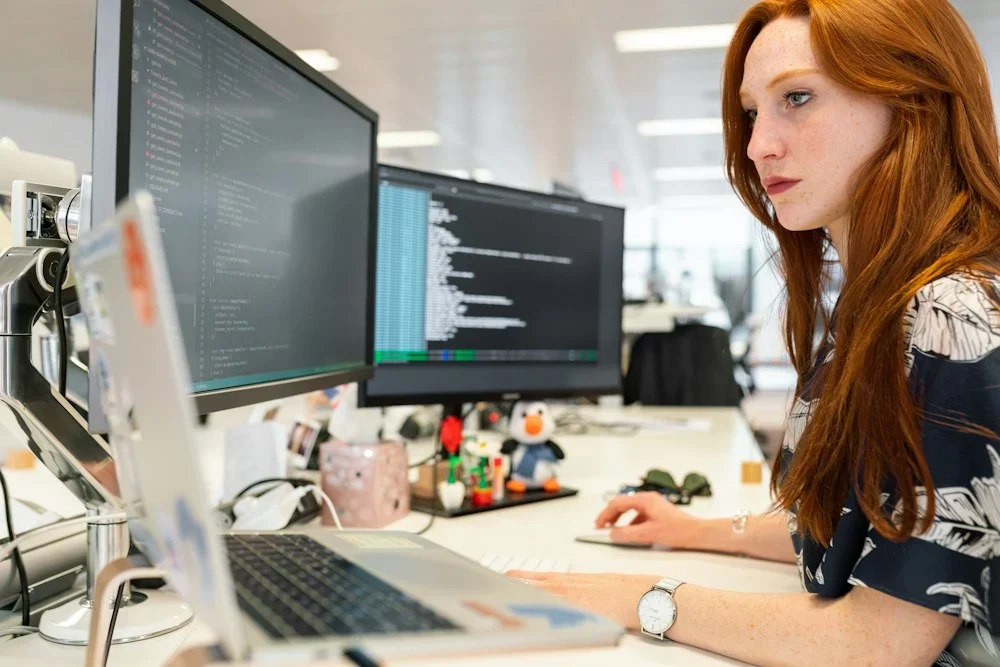
The stereotypes associated with “career mom” and “stay-at-home mom” can flatten lives that are far more fluid and creative. The public perception of stay-at-home motherhood often centers on a slower life at home: loads of laundry, healthy and balanced meal prep, cleaning, and raising children. But modern stay-at-home motherhood can also look like building a business during nap time, leading nonprofit efforts, being part of the village that supports the neighborhood, or exploring a new professional direction. For many of us, this season isn’t simply about sacrifice; it’s about building a life that gives us breathing room while creating stability for our families.
My sister and I had different careers and professional paths when we began our motherhood journeys, but we now have something in common: our professional pursuits no longer come with the promise of stable weekly paychecks. However, they do promise more time with our kids and a way to avoid the exorbitant costs of childcare. And sure, they leave a bit more time for housework. And all the open tabs.
I thought giving up my corporate job would leave me feeling stagnant, without a clear sense of value or contribution. Instead, I feel empowered and more connected to my family than ever. This life allows me to earn money while also being first in line at my kindergartener’s school pickup. And I can create outlines for my latest marketing strategy document in Google Keep Notes while building Duplos with my three-year-old.
Last week, I answered the question “What do you do?” a little differently when I connected with another new neighbor at the intersection where our streets meet, her young baby cooing up at me. Instead of simply saying, “I’m a stay-at-home mom,” I shared more about who I am and what I’m building: the things I’m working on and what’s lighting me up right now.
The conversation shifted. She opened up, too, sharing the projects she was working on, what she enjoyed, and her dreams for herself and her family. I walked away feeling more confident, having shared what felt like a fuller picture of who I am. I sensed she walked away feeling more confident, too.
As for my sister, her daughter is nearly four months old, and she has slowly been reintegrating into the rhythm of her old life in a way that feels doable, sustainable, and adaptable. Her professional self hasn’t gone away. Her work offers a connection to the person she was before becoming a mother and her future self, and that, to me, is the point. Motherhood doesn’t erase the people we were before our children arrived; it challenges us to reconsider what we’ve always done and ask: Is this how we’re meant to do things now?
I urge you to try it the next time you meet someone new or strike up a conversation with another mother. Ask what she’s creating, what she’s learning, what she’s dreaming about, and what she’s making room for in this season of her life. Because we are mothers, yes. But we are also people moving toward who we hope to become next.