


Tick-borne illness is rising in the United States, and 2026 has been one of the worst years on record for tick activity. If your family spends time outdoors, the repellent you choose matters more than ever before.
This article covers what the data shows about the rise in tick-borne disease, picaridin vs. DEET for kids, kid-safe tick repellents according to pediatricians, and the specific products we recommend.
How common are tick-borne diseases?

International peer-reviewed scientific journal Ticks and Tick-borne Diseases cites that about 31 million people in the United States are bitten by ticks each year. The Centers for Disease Control and Prevention estimate roughly 476,000 people are treated for Lyme disease annually. May through August is peak tick season, when the warm weather brings people outdoors.
If you live in the Northeast, the risk is especially high. The Global Lyme Alliance reports that New York, New Jersey, and Pennsylvania account for nearly half of all reported tick bites and Lyme disease cases nationwide.
The trend is moving in the wrong direction. In spring 2026, the CDC reported that weekly emergency room visits for tick bites reached their highest levels since 2017 across nearly every region of the country.
Part of the reason is that ticks are expanding their range. The blacklegged tick, which carries Lyme disease, continues to move into new counties, and the Lone Star tick has spread from the South up the East Coast into the Northeast. Researchers in Ticks and Tick-borne Diseases attribute the spread to a combination of warming winters and changes in land use and deer populations. The Lone Star tick is also linked to alpha-gal syndrome, an allergy to red meat that can develop after a bite. In other words, the risk is not limited to Lyme, and the list of tick-borne conditions is growing.
Picaridin vs. DEET: What the evidence says

Picaridin and DEET are equally effective against ticks. Guidance from outdoor organizations including the Appalachian Mountain Club and REI puts the two ingredients on par for tick protection, though some studies also give picaridin a slight edge against mosquitoes. Choosing picaridin does not mean giving up protection.
The practical advantages of picaridin are what set it apart:
It does not damage gear. DEET dissolves plastics and synthetics, which can cloud sunglasses and degrade watch straps, stroller buckles, rain jackets, and synthetic fabrics. Picaridin does not.
It is close to odorless and does not leave a greasy residue. Being scentless and non-oily makes it easier to apply on children.
Picaridin at 20 percent is the concentration we recommend. It is CDC-recommended and provides up to 12 hours of protection against ticks and mosquitoes. A common misconception is that a higher percentage means stronger protection. It does not. Concentration mainly affects how long the protection lasts, and the CDC notes that DEET concentrations above 50 percent provide no additional benefit.
What pediatricians say about repellent for children

The American Academy of Pediatrics lists picaridin alongside DEET as an EPA-registered repellent that is appropriate for children. It is a mainstream recommendation, not an alternative one.
The AAP’s guidance for using any repellent on kids:
Do not use insect repellent on infants under two months old. For babies, rely on physical barriers such as stroller netting and lightweight long sleeves.
Oil of lemon eucalyptus, often marketed as a natural option, should not be used on children under three. Picaridin carries no such age restriction beyond the two-month floor.
Apply repellent to your own hands first, then to your child’s face, keeping it away from the eyes, mouth, hands, and any broken skin. Wash it off with soap and water at the end of the day.
Avoid combination sunscreen-and-repellent products. Sunscreen needs frequent reapplication and repellent does not, so the two are better used separately, with sunscreen applied first.
What we recommend

The product links below are affiliate links, which means Parenthood Together may earn a small commission at no additional cost to you. We only recommend products we use.
Sawyer Picaridin Insect Repellent
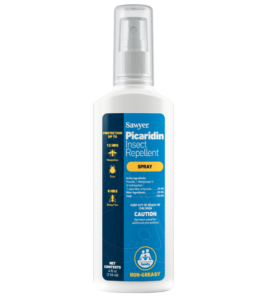
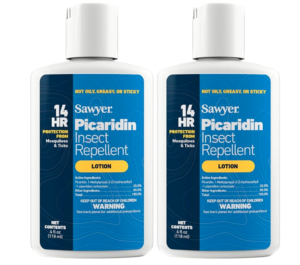
Sawyer 20% Picaridin Pump Spray, 4 oz is an everyday option. It has 20% picaridin, up to 12 hours of protection, and it dries clean without damaging gear. Sawyer Picaridin Lotion is better for younger children and for applying on the face and neck. A lotion gives you more control over where it goes and avoids the overspray of an aerosol.
Natrapel Insect Repellent Wipes
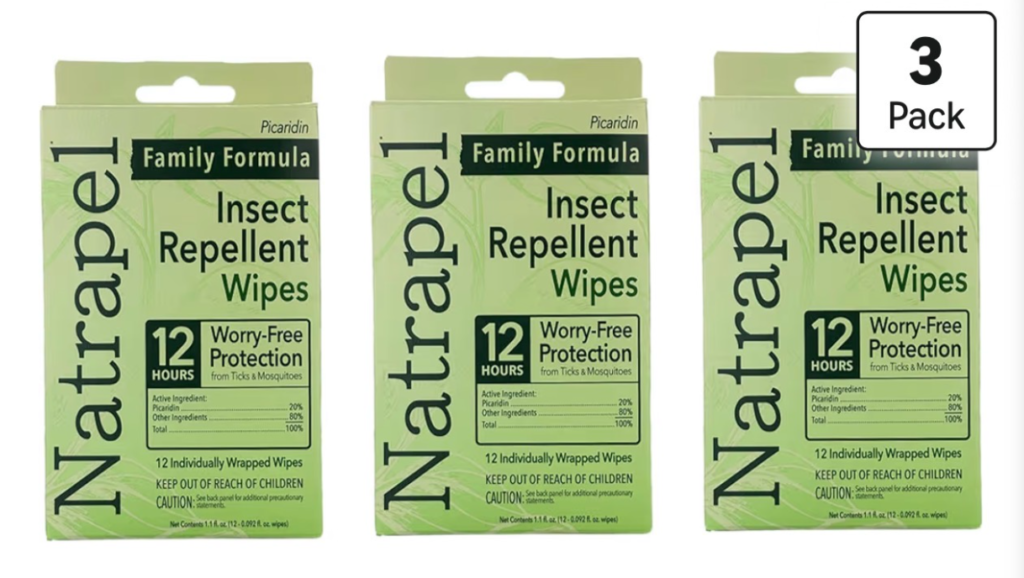
Natrapel 20% Picaridin Wipes are individually wrapped and travel well. They are the easiest option for a diaper bag, backpack, or car, and they clear TSA carry-on rules.
Sawyer Insect Repellent For Clothing, Gear, & Tents
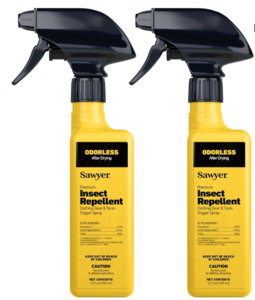
Sawyer Permethrin for Clothing and Gear is applied to clothing, shoes, and gear rather than skin. It kills ticks on contact, and one treatment lasts through about six washes. Treating clothing in addition to using a skin repellent is the layered approach experts recommend.
Always do a daily tick check

Repellent lowers the risk of a bite, but a daily check is what catches the ticks that get through. Timing is the reason it works: for Lyme disease, a tick generally needs to stay attached for a day or more before it can transmit the bacteria. The CDC cites 36 to 48 hours in many cases. Finding and removing a tick the same day significantly reduces the risk.
Check at bath time. Look behind the ears and along the hairline, on the back of the neck, in the armpits, around the belly button, behind the knees, and anywhere clothing fits snugly. Ticks can be as small as a poppy seed.
To remove a tick, use fine-tipped tweezers, grip as close to the skin as possible, and pull straight up with steady pressure. Do not use a match or petroleum jelly, which can further harm the skin. Clean the area and note the date. If a rash, fever, or flu-like symptoms appear in the following days or weeks, knowing the precise date will help your pediatrician.
Tick-borne disease is more common and widespread than it used to be, but the steps to reduce the risk are straightforward:
- use a 20 % picaridin repellent
- treat clothing and gear with permethrin
- do a daily tick check.
Subscribe to Between Us, our weekly newsletter for more, and join the conversation in our community at facebook.com/groups/parenthoodtogether.
For current tick activity in your area and the latest removal guidance, see the CDC’s tick resource center.

