

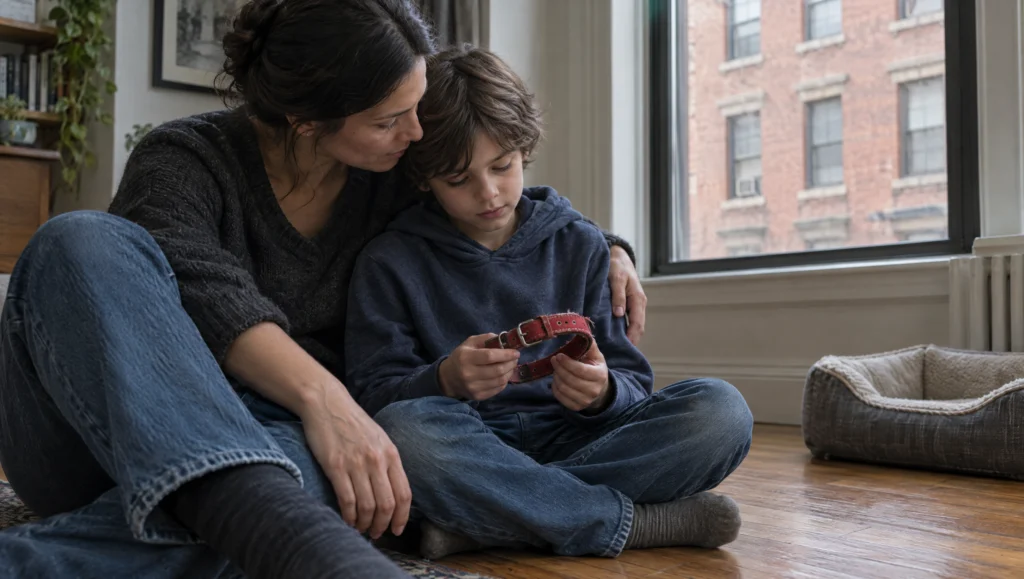
Losing a family pet is never easy, especially when you have to consider your children’s emotions. Your first instinct may be to shield them from hard realities, but when a pet dies, kids need three things from you: the truth in simple words, permission to feel sad, and a way to say goodbye. Use the word “died” instead of softer phrases, answer their questions honestly, give them a way to remember the pet, and show them you’re sad too. Your own grief is real as well, and it’s okay to express it in a healthy way.
If your pet is sick or near the end
- Tell your kids early. UC Davis veterinary experts advise telling children as soon as possible when a pet is terminally ill. The American Academy of Pediatrics suggests explaining what’s happening in a way that fits their age, answering questions, and focusing on enjoying the time you have left.
- Give them a chance to say goodbye. The American Academy of Child and Adolescent Psychiatry recommends letting children say goodbye before the pet dies when possible. That might be extra time cuddling, a last walk, or a photo together.
- Explain euthanasia honestly. KidsHealth suggests telling kids that the vet has done everything possible, the pet won’t get better, and euthanasia is the gentlest way to end its pain. You can add that the pet will die peacefully, without feeling hurt or scared.
- Decide together whether your child will be there. Veterinarians disagree on whether children should be present, according to UC Davis. Many kids want to say goodbye beforehand, and KidsHealth notes that older or more mature children may be able to stay and comfort the pet. Your vet can help you decide what fits your child.
How to tell your child the pet has died
Use clear words: “died,” “dead,” and “dying.” Avoid phrases like “put to sleep,” “went away,” or “we lost him.” KidsHealth explains that young children may take “put to sleep” literally and become afraid of going to sleep or having surgery. UC Davis warns that softened language can cause anxiety and confusion because children can misinterpret it.
AACAP recommends sharing the news calmly, in a familiar place, while offering a hug or a lap to sit on. You might say, “I have some very sad news. Biscuit died today. Her body was very old and sick, and it stopped working. She isn’t in pain anymore, and she won’t be coming back. It’s okay to feel sad. I feel sad too.”
Kids often ask why the pet died, whether it was their fault, and whether they’ll see the pet again. Answer simply and truthfully. If your family has religious or spiritual beliefs about death, this is a natural time to share them, and the AAP suggests following your child’s lead.
What pet loss looks like at different ages
- Toddlers have trouble understanding death. The AAP notes they may ask again and again where the pet is, or seem unconcerned. That isn’t a lack of caring. They just don’t understand yet.
- Preschoolers often think death is temporary or reversible, according to AACAP. They may need to hear the basics more than once: the pet can’t move, see, or hear anymore, and won’t wake up.
- Early grade schoolers start to develop a more realistic understanding, and AACAP says most kids understand that death is permanent by about age 9.
- Teens understand death fully, but the AAP notes that their grief can range widely, from deep sadness to outwardly appearing fine.
At any age, kids may feel sadness, anger, fear, guilt, denial, or even jealousy of friends who still have their pets. All of these are normal. Name the feeling, let it be, and stay close. The approach we share for validating a young child’s big feelings works here too.
Some links in this article are affiliate links. If you buy through them, Parenthood Together may earn a small commission.
Picture books can help kids put their feelings into words. “The Tenth Good Thing About Barney” by Judith Viorst is told by a child whose cat has just died, and it handles both the sadness and the questions about death in simple, direct language.

It’s okay for you to grieve too
Losing a pet is losing a family member, and adults feel it deeply. You don’t need to hide that from your kids. The AAP says hiding your sadness can confuse children, and AACAP notes that sharing your feelings shows them a healthy way to grieve. Crying together is okay.
If you need someone to talk to, Cornell University’s Pet Loss Support Hotline (607-218-7457) is staffed by veterinary student volunteers trained by grief counselors. Hours vary by season, so call for current times. Leaning on friends and family helps too. Read more about the power of community in hard seasons.
Ways to say goodbye and remember your pet
There’s no single right way to mourn. AACAP and the AAP suggest ideas like these:
- Hold a small burial or ceremony, and let each person share a favorite memory
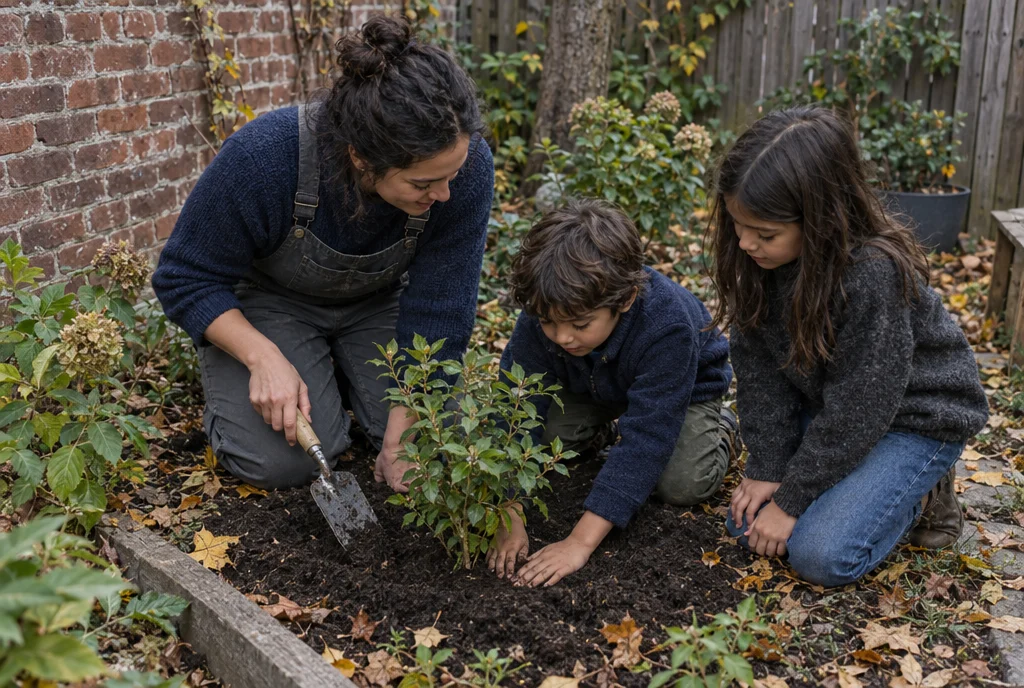
- Plant a tree, shrub, or flowers in the pet’s honor
- Make a collage or photo book
- Write a poem, letter, or story about the pet
- Draw pictures
- Pray together, if that’s part of your family’s practice
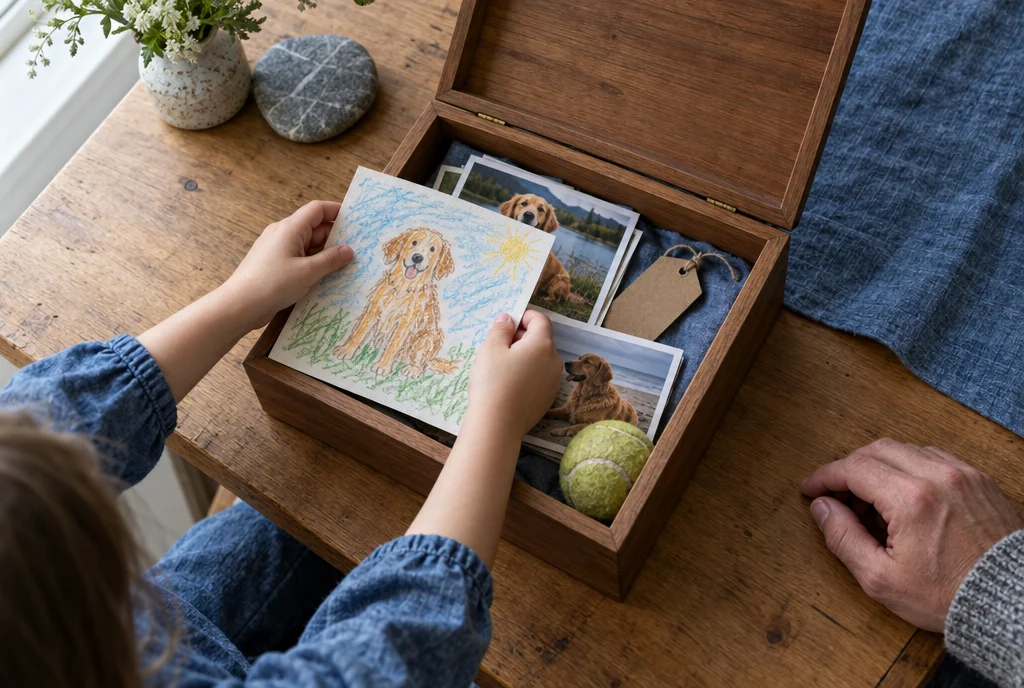
- Fill a memory box with the collar, tags, a favorite toy, and photos
The AAP recommends suggesting a memorial gently and following your child’s wishes, since some kids find rituals uncomfortable. Some want to plan every detail, and others want to keep it small.
For kids who like making things, turning a favorite photo into a painting can be a calm, hands-on way to remember. The Paintable Pictures paint-by-number kit turns a photo into a custom portrait. It makes up to two 8×10 paintings and requires an inkjet printer.

Should you get a new pet right away?
AACAP says it’s usually best not to replace a pet right away. When you do bring a new pet home, the AAP suggests presenting it as a new adventure rather than a way to stop feeling sad. Otherwise, kids may expect the new pet to be just like the old one, or may come to believe that loved ones can simply be replaced.
When to get extra help
There’s no set timeline for grief, and some children take longer than others. The AAP lists signs that a child may need more support:
- Trouble functioning at home or school that continues months later
- Preoccupation with the pet
- Acting out, or substance use in older kids
- Deep, long-lasting sadness
AACAP adds that a pet’s death can bring up earlier losses or upsetting events. Talk to your pediatrician if you notice sleep problems, anxiety, or signs of depression, or if your child seems unable to keep up with their usual routine. If you think your child may be thinking about suicide, call or text 988 right away.
FAQ
Is it okay to cry in front of my kids?
Yes. Seeing you grieve shows them that sadness is a normal response to loss, and that it’s safe to share.
Should I tell my child’s teacher?
A quick note can help. Teachers can offer extra patience and understanding if your child seems distracted or upset at school.
How long will my child be sad?
There’s no set timeframe. Some kids bounce back within days, while others need weeks or longer. Watch for the signs above, and keep the conversation open.
The bottom line
Tell your kids the truth in simple words, let them see your sadness, and find a way to remember the pet together. Grief over a pet is real grief, for children and for you, and it deserves time and care.
This article is for general information and isn’t a substitute for advice from your pediatrician, a mental health professional, or your veterinarian.