

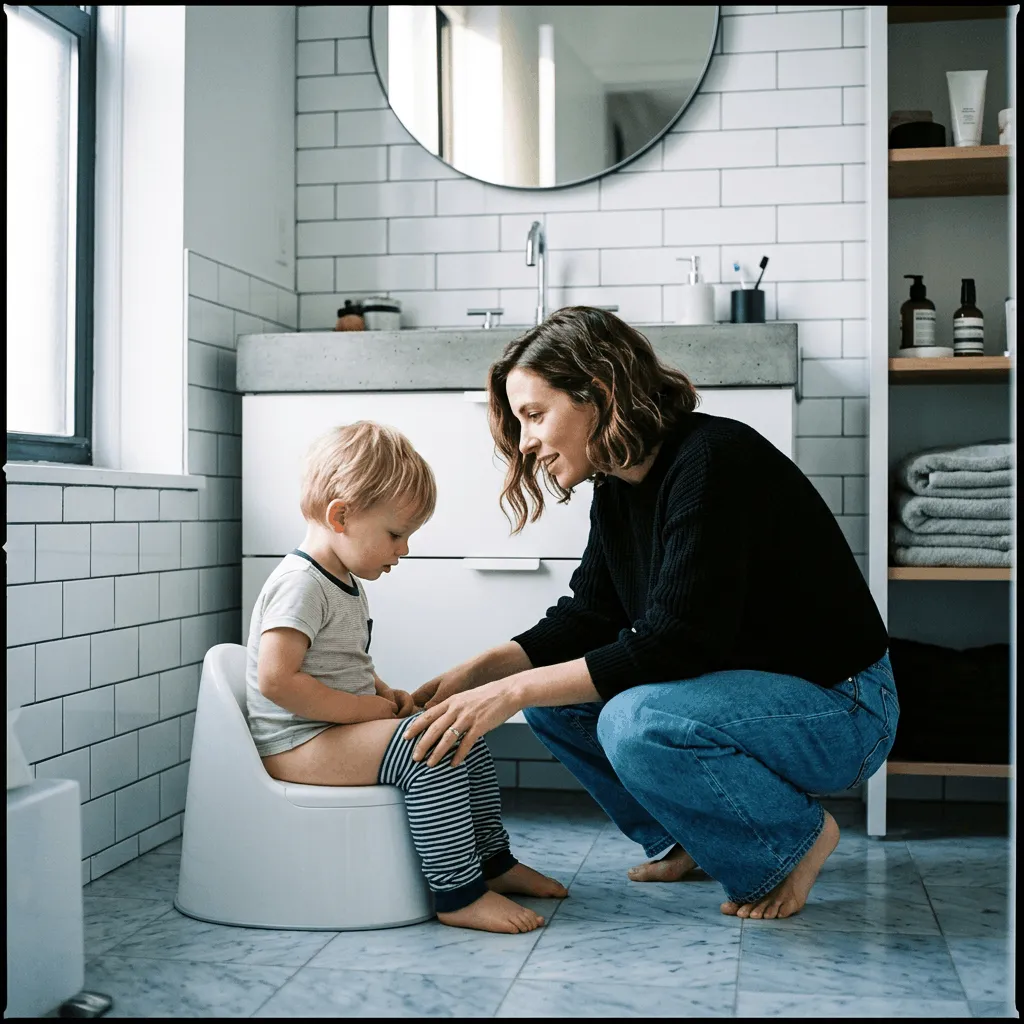
Put all your worries and anxieties aside. Your kid is not going to college in a diaper. They are going to figure this out. If you are about to try the weekend potty training method, remember that whatever happens, you are going to be okay.
Now, let’s get into it.
The weekend potty training method works because it is a full commitment in a short window. No half-measures, no distractions, no leaving the house. Two to three days of focus, encouragement, and teamwork build the foundation most kids need to click into this new skill. We are walking you through the whole thing: readiness signs, what to buy, how the weekend runs, and what comes after.
Don’t skip this part: Is your toddler ready? Watch for these signs
Starting before your child is developmentally ready will make the process longer and harder. Do not rush this. According to the American Academy of Pediatrics, most children show readiness between 18 and 24 months, though some are not ready until closer to three.
Look for these signals:
1. Your child stays dry for two or more hours at a stretch.
2. They wake up from naps dry at least occasionally.
3. They show awareness of when they are going: pausing, squatting, going quiet, or telling you after the fact.
4. They are curious about the toilet.
5. They can follow simple two-step instructions.
6. They can pull their pants up and down (or make a real attempt).
7. They are showing some desire for independence and ownership.
If you are seeing several of these, you are ready. If not, give it a few more weeks. A short wait now prevents multiple failed attempts later. You can simply bookmark this and come back to start anytime!
What you need to buy (you don’t need much)
This method does not require a lot of gear. Here’s what we recommend:
A toilet or small potty.
We prefer a full-size toilet with a built-in attachment like this one, or a seat with handles like this one. Encourage independence and the usage of a step stool! Some swear by a portable foldable travel potty, but we don’t think it’s an absolute necessity.
A standalone toddler potty seat is helpful for kids who are intimidated by a full-size toilet, but either works. Pick one and use it consistently.
Training underwear — not regular underwear. This is worth emphasizing. Padded training underwear has a thin layer of absorbency built in. It is not enough to contain an accident, but it slows the rush by a second or two, which gives your child time to feel what is happening and start connecting sensation to action. You want your child to feel the wetness, so do NOT bring diapers back EVER… (with the exception of nighttime diapers)
Nighttime diapers. We are not night training this weekend. Keep overnight diapers or pull-ups for sleep and do not let the daytime progress guilt you into removing them at night before your child is ready. These are two different milestones, daytime training and nighttime training!
Rewards. Stickers, their favorite snack, a piece of candy, or a little celebration dance. This entire method runs on positive reinforcement. A simple reward chart keeps the energy up and lets your child see their own progress.
What you are signing up for
Clear the calendar entirely. Cancel any plans you were thinking of keeping. This only works if you are all in.
Roll up your rugs and carpets. We know this isn’t always possible, but roll them up if you can.
Your child spends the weekend without anything on their bottom half. No diaper, no underwear, no pants. The absence of any covering sharpens their body awareness significantly. When accidents happen on a hard floor, the sensation is immediate, and there is no cushion between the feeling and the consequence. That feedback loop is what accelerates learning.
Keep the toilet or potty accessible and visible. If you are on multiple floors, put a portable potty on the main living level. Leave the bathroom door open. Narrate your own trips to the bathroom without making it weird. Normalize the whole thing.
Watch your child. When you see the pre-accident signals, calmly walk them to the toilet, without sounding any alarms. Just: “Let’s go try the potty.” When something makes it in, celebrate loudly. Sticker on the chart. Treat of choice. Encouragement! This is a big deal, and your reaction tells them so.
When accidents happen (and they will, more than once), keep your response completely neutral. Clean it up calmly. Say: “Pee goes in the potty. Let’s go wipe up.” No sighing, no disappointment in your voice, no drawn-out lesson. Move on quickly. The goal is neutral cleanup paired with enthusiastic success celebration.
By the end of day two, most children will start moving toward the potty before an accident occurs. That anticipation is the milestone you are looking for.
What to expect after the weekend
The weekend builds the foundation. The weeks that follow are where the habit solidifies. Be ready for this.
Accidents will continue at home, at the store, and in the car. Keep a waterproof car seat protector in your vehicle. Pack two full outfit changes in your bag every time you leave the house. Keep a small wet bag for soiled clothes so you are not scrambling.
Some clothes will not survive this season. That is okay. Buy inexpensive basics and be willing to let them go.
Talk to your child’s school or daycare before Monday. This step gets skipped constantly, and it matters. Sit down with their teacher, explain where you are in the process, and ask about their bathroom schedule. Confirm they will take your child frequently, use positive language around accidents, and check in with you on progress. If the school and home approach are inconsistent, progress slows. Get them aligned before your child walks back through that door.
Keep the rewards going for several weeks. Taper slowly. Pulling the sticker chart on day four undermines the reinforcement structure you built all weekend.
You are going to pass this article to someone else one day
Every parent who has been through potty training will probably reach a moment when a friend texts them saying their kid might be ready. You may look back on the weekend you rolled up your carpets and just went for it!
You’re going to be on that other side soon. And this article is going to be the thing you can send to your friend to guide them through.
But first, you have to go through it! So take a breath, stack the rugs in the corner, and commit to the weekend. Your kid is going to figure this out, and so are you.
Got a question we did not answer? Come ask it in our community. We have parents at every stage who have been through exactly what you are navigating.
Join the Parenthood Together Facebook Group: facebook.com/groups/parenthoodtogether
At Parenthood Together, we share tools and honest conversation for every stage of the parenting journey. Some links in this article may be affiliate links, which means we may earn a small commission if you make a purchase. We take time to vet our recommendations with care.